
Accounting software vs Excel: choose around your business workflow
A practical decision worksheet for small businesses moving from separate spreadsheets to connected purchasing, inventory and sales records.
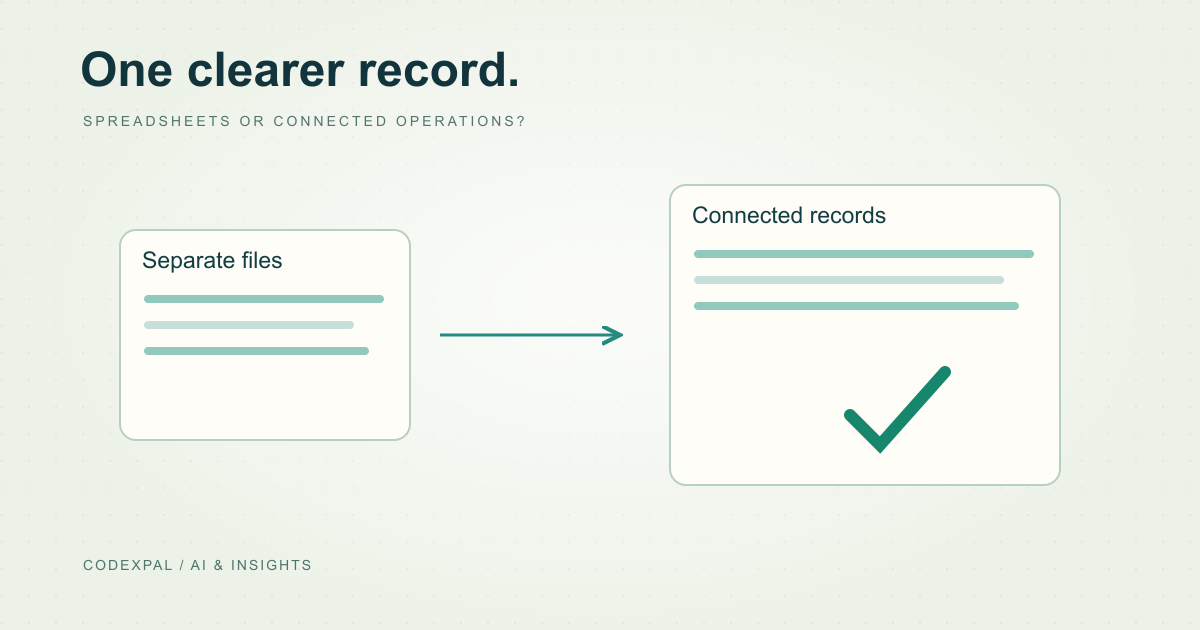
A spreadsheet can be a useful starting point. The decision to replace it should come from work that has become difficult to control: duplicated records, unclear ownership, inconsistent stock counts or slow reconciliation. This guide offers an operational decision method, not tax advice or a claim that every small business needs an ERP.
Map one transaction from beginning to end
Choose a real sale and follow it through the files you use. Where is the customer recorded? Who reduces stock? Where is a later payment entered? Count the places where the same information is typed again and note which record the team trusts when numbers disagree.
Do the same for a purchase and a return. A workflow that is simple for one person may become confusing when a second person edits another copy. The issue is the hand-off and the evidence trail, not the appearance of a spreadsheet.
Compare control, not feature counts
Write down the controls your team actually needs. Can you restrict who changes a price? Can you find the original entry after a correction? Can you export records and restore a backup? Test these questions in a candidate system with sample data before moving your live records.
| Question | What to test |
|---|---|
| One source of truth | Enter one sale and follow its stock and payment records |
| Correction history | Correct a mistake without erasing the original evidence |
| Team ownership | Have two people complete separate parts of a workflow |
| Exit and recovery | Export sample records and check the recovery process |
Use a small, reversible migration
Start with a clean product list, customer identifiers and opening records reviewed by the person responsible for your books. Keep a dated copy of the old files. Define what is being migrated and which system will be authoritative after the cutover.
Run a limited pilot with a small set of products or transactions. Compare totals and investigate differences before expanding. Avoid a permanent arrangement where staff must maintain two complete systems; that usually recreates the duplicate-entry problem.
Choose a system that matches the work
If your records remain small and controlled, improving the spreadsheet process may be enough. If purchasing, stock, sales and storefront activity need to stay connected, investigate a business management system against the workflow you mapped.
KhataIN is one option in the CodexPal ecosystem for connected business operations. Treat it as a product to evaluate, not an automatic answer: confirm current features, exports and plans on the dedicated platform.
The takeaway
Make the decision from recurring errors, hand-offs and control requirements. A successful move gives your team a clearer record of what happened and a reliable way to correct it.
More to think about.
How to manage retail inventory: a practical starting system
Build a usable stock register, separate sales from adjustments, and use a simple replenishment worksheet before automating your shop.
From an offline shop to an online store: a practical roadmap
Separate being discovered from taking orders, accepting payments and fulfilling them. Start with one complete customer journey.