
A practical AI learning roadmap for students in Nepal
Build foundations, use open learning resources and finish a small project you can explain — without chasing every new model.
You do not need to begin an AI learning journey by training a large model. Start by learning to write small programs, inspect data and explain what a model is doing in a limited task. For a student in Nepal, a locally meaningful project can make the work more concrete: search approved college notices, organize fictional shop inquiries or evaluate a bilingual question-answering workflow.
Build enough Python to inspect your own work
Learn variables, functions, lists, dictionaries, files, exceptions and basic tests. Practice reading a small CSV or JSON file, cleaning a field and reporting a result. The aim is to understand the code you run, including what happens when the input is missing or malformed.
The official Python tutorial is a useful reference as you practice. Keep a small repository with a README explaining how to run each exercise. A program that you can debug and explain is a stronger foundation than a large notebook copied without understanding.
Reference: Python — The official tutorial
Learn model concepts through small experiments
Work through a modest machine-learning example before trying to build a general assistant. Learn the difference between training data and evaluation data, what a loss function measures and why a model can fit training examples without performing well on new ones.
PyTorch’s introductory material walks through a basic workflow, while the Hugging Face LLM Course introduces language-model concepts. These learning materials are available to read online. Any optional hosted compute, downloads or external APIs may have separate costs or access requirements, so check before using them.
Reference: PyTorch — Learn the basics · Hugging Face — LLM Course
Choose one project with a clear boundary
A notice-search project can begin with a handful of public or otherwise permitted documents. Define questions it should answer, questions that need clarification and questions it should decline because the source is missing. Start with keyword retrieval before adding embeddings or generation.
A bilingual version can compare Devanagari and Romanized Nepali questions that mean the same thing. Do not claim that the system works for Nepali in general. Report which inputs you tested, which source collection you used and where the results failed.
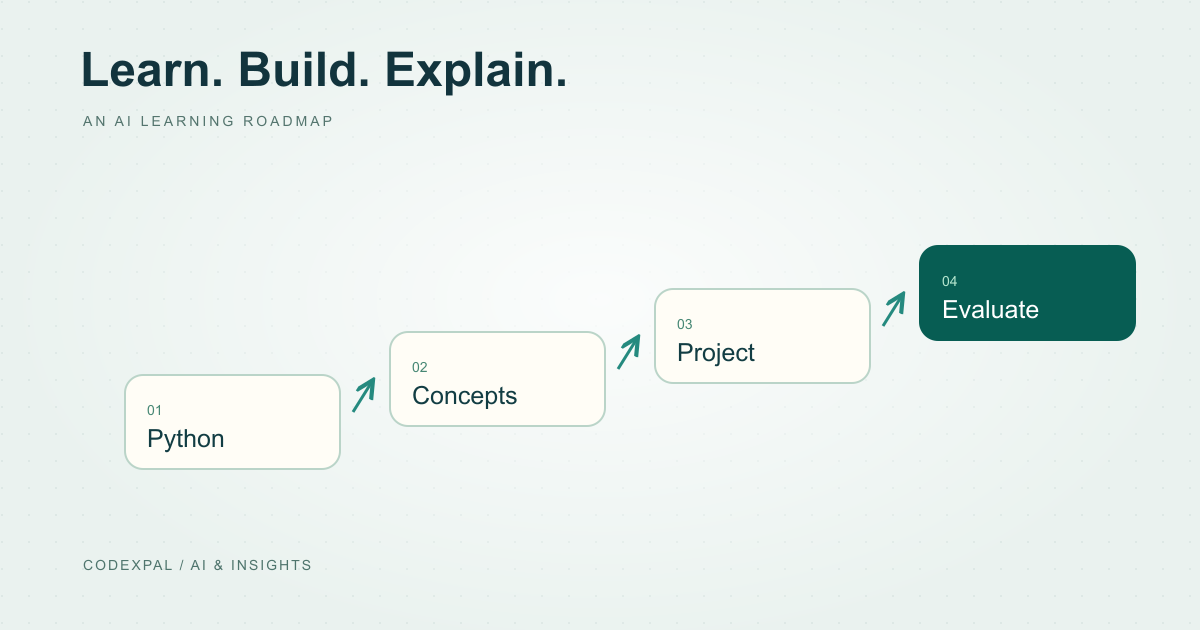
A project-centered learning path
- 01PythonSmall inspectable programs
- 02ConceptsData, models and testing
- 03ProjectOne bounded real question
- 04EvaluateEvidence and limitations
Work within your actual compute and connection
Keep early datasets small enough to inspect locally. Save notes, scripts and allowed sample data so you can continue learning without rerunning expensive jobs. You can learn retrieval, validation and evaluation with ordinary code before downloading a large model.
If a course suggests hosted notebooks or paid services, treat them as options rather than requirements. Confirm account terms, resource limits and cost controls. For a low-resource experiment, a tiny dataset and a clear test report can teach more than a large run you cannot reproduce.
Finish with an explanation and an honest report
Write the problem, intended users, setup instructions, data source and limitations in the project README. Include a small test set and examples of both useful behavior and failure. Explain which parts are original and which came from a tutorial or library.
Ask another student to run the project from your instructions. If they cannot reproduce it, improve the setup before adding more features. When sharing the work, emphasize the problem you investigated and the evidence you collected, rather than making broad claims about job readiness or model quality.
The takeaway
Learn the foundations, finish one bounded project and evaluate it honestly. Your location can give you useful questions to investigate; clear code, reproducible setup and thoughtful tests make the work understandable to anyone.
Sources & further reading
Primary references checked on October 18, 2026. Examples and diagrams are illustrative unless stated otherwise.
More to think about.
Make your local business easier to find online in Nepal
A practical visibility checklist for shops and services: accurate details, useful descriptions, real evidence and a clear way to contact you.
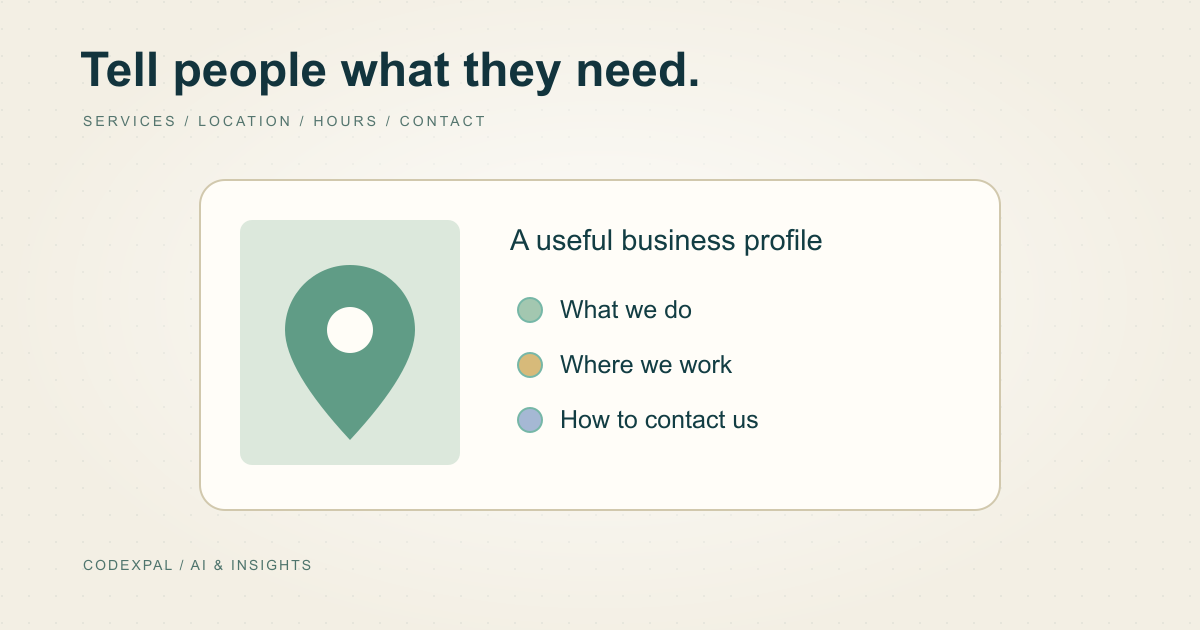
How to write a useful local business listing
Explain what you do, where you work and how to contact you—without keyword stuffing, fake claims or unclear service promises.