
Perplexity vs ChatGPT for research: verify the evidence
A source-checking workflow for choosing a research assistant, including a comparison worksheet that measures citation quality rather than answer length.
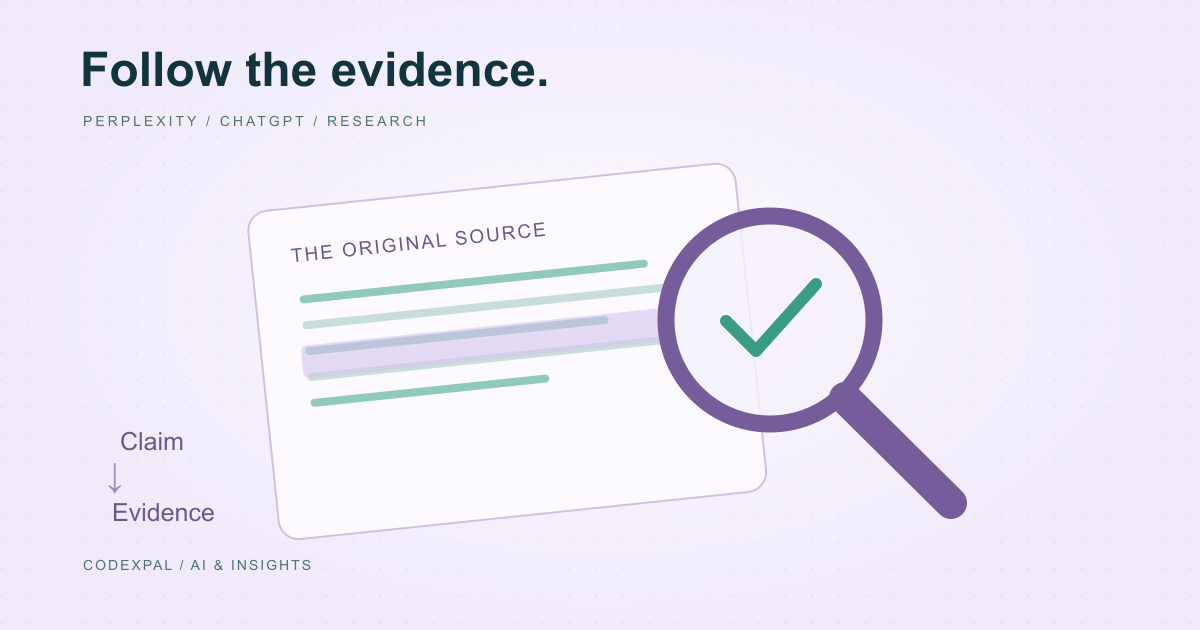
An answer with links can still be wrong. The cited page might support only part of a sentence, refer to an old policy or repeat another unsourced claim. When comparing Perplexity and ChatGPT for research, inspect the evidence trail instead of counting citations or choosing whichever answer sounds more confident.
Compare equivalent research conditions
Perplexity documents free and paid search-oriented plans, with different access to research tools. ChatGPT’s available capabilities depend on the plan and enabled tools. Record the account tier, date, search mode and supplied material before comparing results.
Give each assistant a bounded question with a clear date and location where relevant. For example: identify the current official eligibility rules for a named service, and provide the primary page for each rule. Avoid a broad request for “everything about” a topic if you need an answer you can audit.
Reference: Perplexity — plan capabilities · OpenAI — plan documentation
Audit one claim at a time
Copy each material claim into a short worksheet. Open its cited source and find the sentence or table that supports it. Note when the source was published or updated, whether it is primary evidence and whether important conditions were omitted.
Mark a claim unsupported if you cannot find the evidence. Do not repair the answer in your head and then score the assistant as correct. Keep discovered facts separate from your interpretation of them.
| Claim check | What to record |
|---|---|
| Direct support | The passage or table that actually supports the claim |
| Freshness | Effective date, update date and any expired offer |
| Authority | Original provider, regulator or research publication |
| Completeness | Conditions or exceptions missing from the answer |
Measure the cost of verification
Track how many claims needed correction and how long verification took. An answer that reaches primary sources quickly can be useful even if you rewrite its prose. A beautifully organised report can be expensive if every paragraph needs a new search.
If the assistant cannot access a source, ask it to say so. A paywall, a dynamic checkout page or a missing document should remain an explicit gap. Never accept a guessed price or invented quotation as a substitute for unavailable evidence.
Use a research assistant as a starting point
For a low-stakes overview, a quick summary can help you discover terms and sources. For a decision involving money, a contract or someone’s wellbeing, consult the relevant original material and appropriate expertise. The consequences of an error determine how much checking is needed.
After a small trial, compare the tools using your worksheet. Choose the option that helps you produce a reliable brief with the least total effort. This is a proposed evaluation workflow, not a claim that we ran a controlled head-to-head benchmark.
The takeaway
Judge a research assistant by how easily you can verify its answer. Keep the sources, dates and unresolved gaps alongside your final notes.
Sources & further reading
Primary references checked on October 18, 2026. Examples and diagrams are illustrative unless stated otherwise.
More to think about.
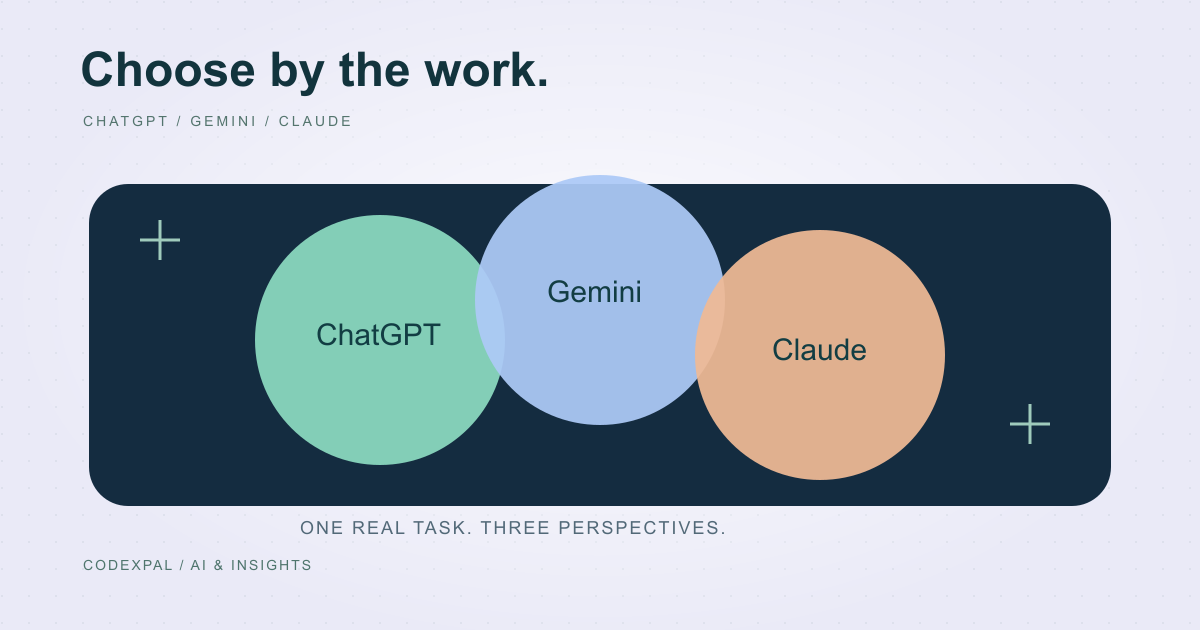
ChatGPT vs Gemini vs Claude: choose by the work, not the hype
A practical comparison framework for writing, coding, research and everyday work, with official plan references and a repeatable evaluation worksheet.
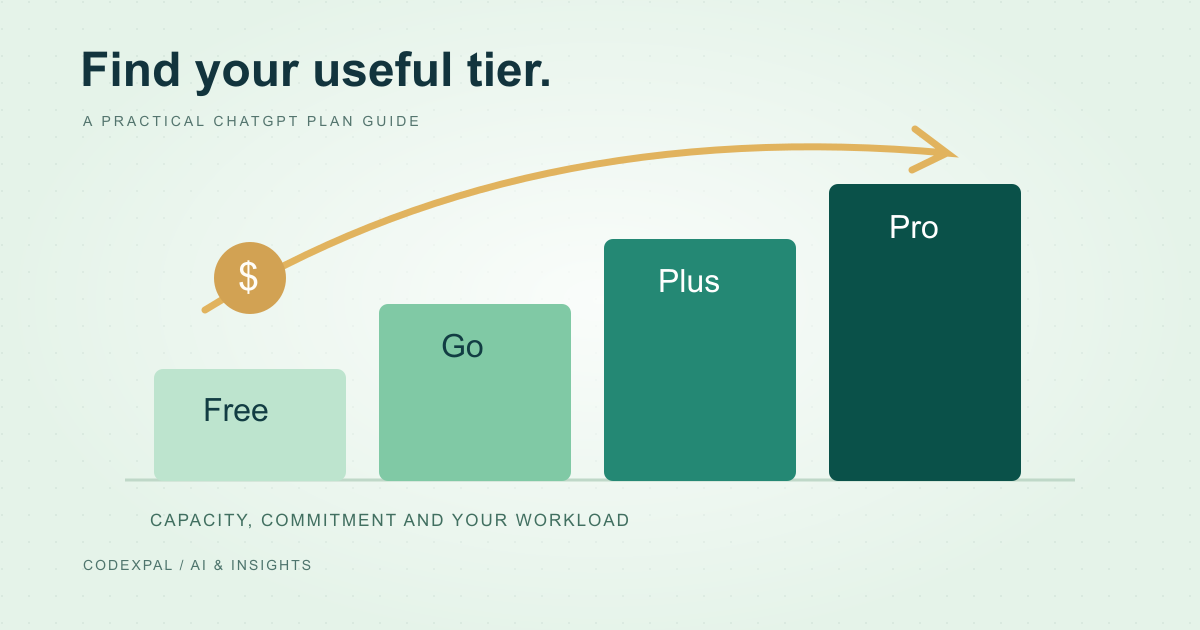
ChatGPT Free, Go, Plus and Pro: how to choose a plan
Understand the difference between an occasional-use plan and a recurring work budget, and avoid confusing a chat subscription with metered API usage.